Billing
How to reduce claim denials: the front-end habits that keep money moving
Most claim denials are preventable and start before the claim is ever sent. Here are the front-end habits — eligibility, clean coding, and timely filing — that keep denials low.
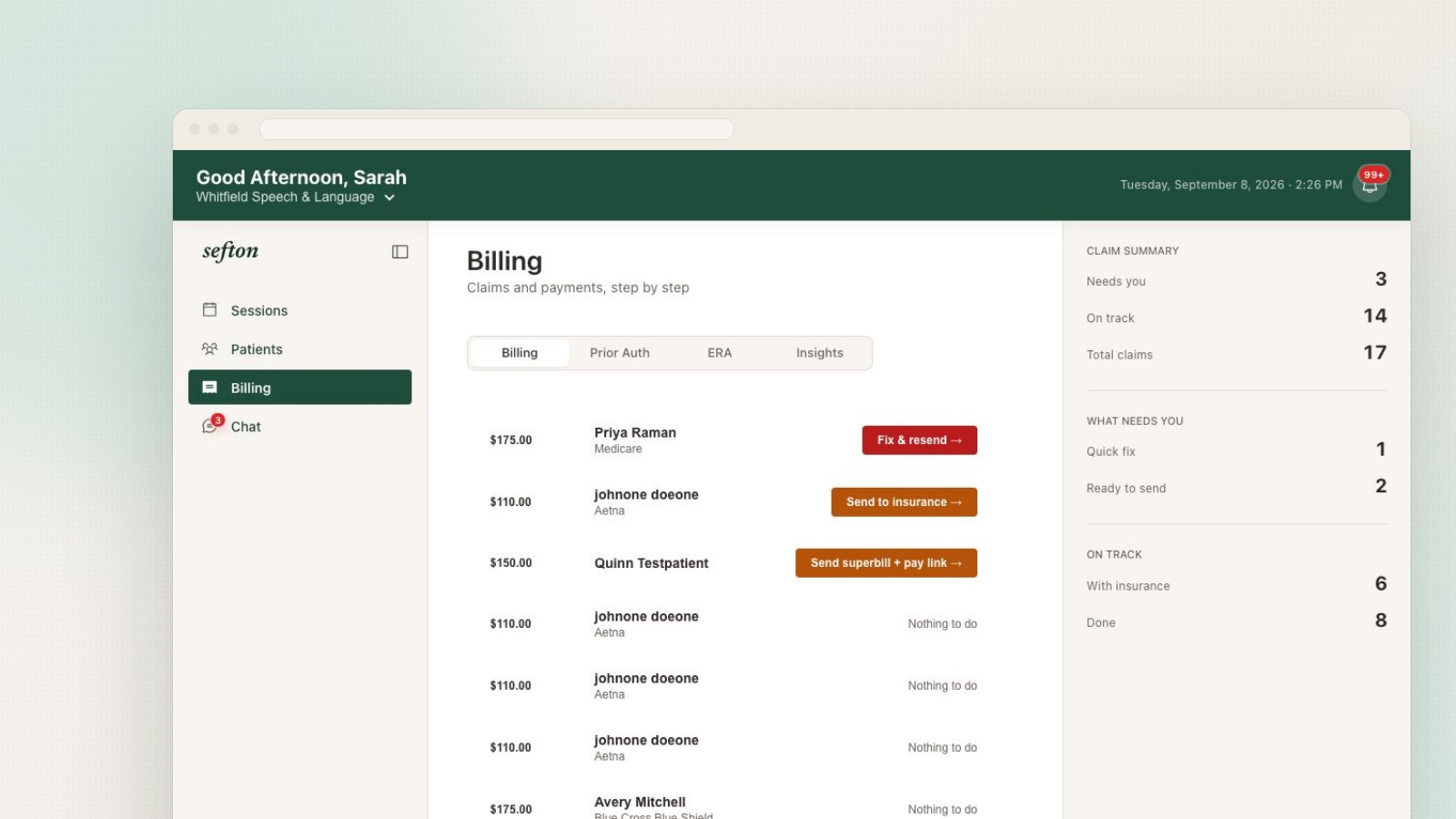
Most claim denials are preventable, and almost all of them are decided before the claim is ever submitted. The work that keeps denials low happens at the front desk and in the note — not in the appeals queue.
The big three front-end habits
1. Verify eligibility before the visit
Eligibility and registration errors are consistently among the top denial reasons. A quick check that coverage is active and member details are correct — before the patient is seen — removes an entire category of denials.
2. Code cleanly at the point of care
Diagnosis and procedure codes that don’t match, or that miss required modifiers, get bounced. Capturing coding accurately while the visit is fresh beats reconstructing it days later.
3. File on time
Every payer has a timely-filing window. Claims that miss it are denied no matter how clean they are.
How Sefton helps
- Eligibility checks before the visit surface coverage problems while you can still fix them.
- Sefton Voice note-to-claim captures coding at the point of care.
- Claim scrubbing before submission flags common errors before a claim ever reaches the payer.
Sefton Health, Inc. operates the platform as your practice’s business associate. It is built to support HIPAA compliance and a BAA is available, with encryption at rest and in transit, PHI-aware audit logging, role-based access control, and HIPAA-eligible cloud hosting.
Frequently asked questions
What is the most common reason claims get denied?
Eligibility and registration errors — the patient's coverage wasn't active, or member/plan details were wrong — are consistently among the top denial reasons, and they're almost entirely preventable with a quick eligibility check before the visit.
What is a good clean claim rate?
Many practices aim for a clean claim rate of 95% or higher — meaning 95%+ of claims are accepted on first submission without edits. The closer you get, the less time your team spends reworking denials.