Clinical practice
Home programs families actually do
Why most home exercise programs die in a folder, and the five design choices (one skill, a trigger, the family's language, a check-off, and a feedback loop) that make them stick.
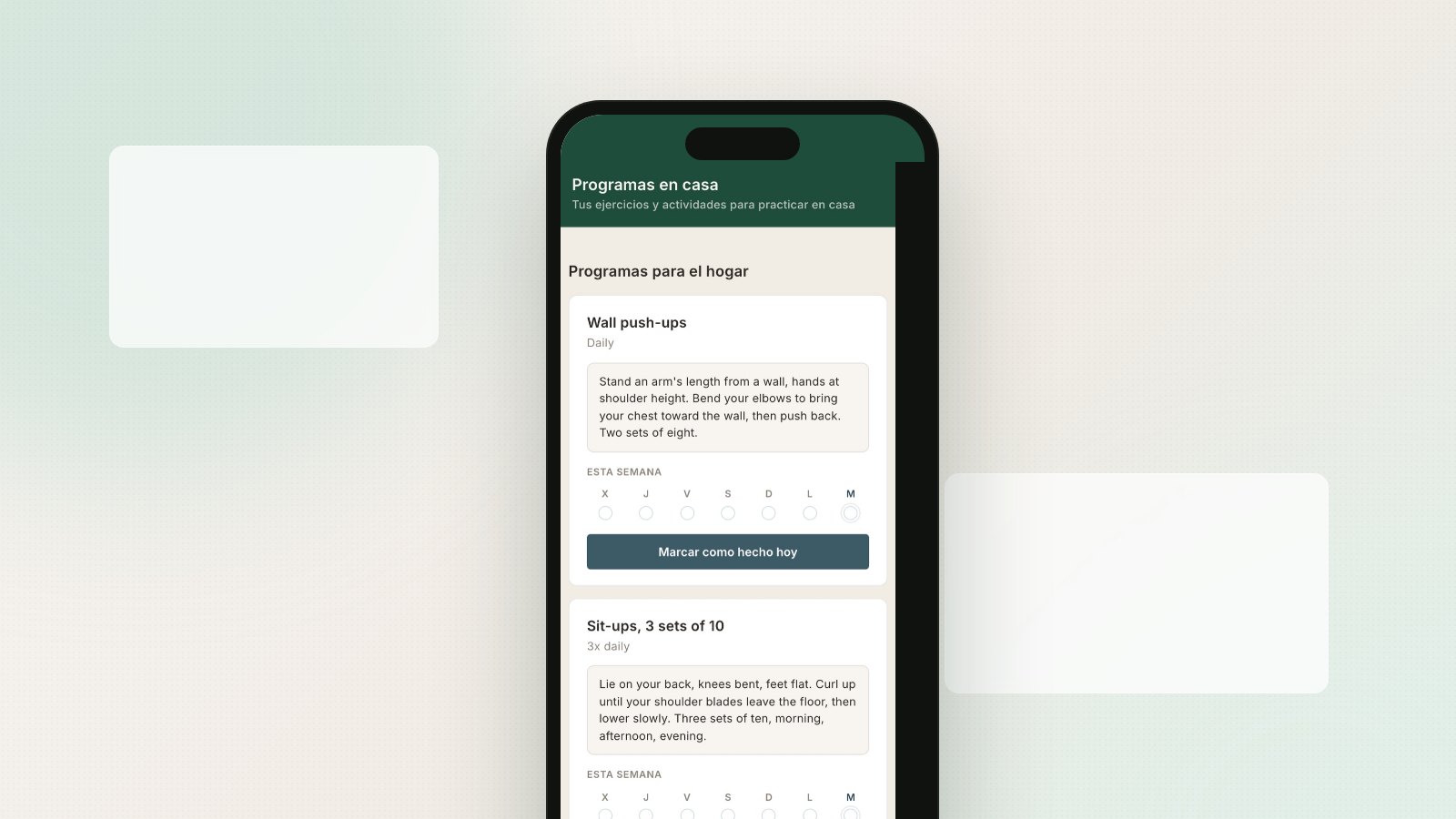
Ask a parent what happened to the handout from the last visit and the honest answer is usually a drawer. That is not a motivation problem. It is a design problem, and it has a fix.
Why handouts fail
A printed program asks a busy adult to remember an unfamiliar task, at no particular time, with no way to know whether they are doing it right, and no one noticing whether they did it. Every one of those is a known adherence killer. The content of the exercise is rarely the issue.
Five choices that change the outcome
1. One skill
Assign the one thing that matters most this week. “Heel raises, 3 sets of 10” beats a sheet of eight exercises the family will do zero of. When it is habitual, add the next.
2. A trigger
Anchor practice to something that already happens: after brushing teeth, during the drive to school, while the pasta boils. Write the trigger into the instructions. “Practice the /r/ word list at breakfast” is a plan; “practice daily” is a wish.
3. Their language
If the caregiver reads Spanish and the instructions are in English, the program is decoration. Write it once and let the portal show it in the family’s language, with your original available if they want to see it.
4. A check-off
A button that says Mark done today does two things a handout cannot: it gives the family a small win, and it gives you data. This week’s pattern of check-offs is the conversation starter at the next visit.
5. A feedback loop
Look at the check-offs before the session and say something about them. “You did the heel raises five of seven days, and look at the balance today.” Families keep doing what someone notices.
What to write in the instructions
Sets, reps, and the cue that worked in session. Cues are the part families forget, and they are the part that makes home practice look like therapy instead of exercise. “Say ‘tongue up’ before each word” is worth more than another set.
Linking practice to goals
Attach the program to the goal it serves. When a progress report is due, the goal shows in-session accuracy alongside a month of home practice, which is a stronger medical-necessity story than accuracy alone.
In Sefton
Assign home practice from the patient record with title, instructions, frequency, and a linked goal. The family sees it in the portal in their language, marks it done, and you see adherence on the record with a flag when there has been no activity for a week. Details in Home programs and, for families, Patient portal: home programs.
Frequently asked questions
How many home programs should a family have at once?
One or two. Adherence drops sharply with each additional program; add the next when the first is habitual.
Should home practice count toward goal progress?
As evidence, yes. It is not a clinical measurement, but a week of check-offs alongside session data tells you and the payer that the plan is being carried out.