Billing
The KX modifier and the therapy threshold: when and how to use it
What the annual therapy threshold is, what the KX modifier attests, how the targeted medical review threshold differs, and how to keep the documentation that makes KX defensible.
The therapy cap is gone; the threshold and the KX modifier remain, and they trip practices up every winter when the year’s totals catch up with them.
Two thresholds
CMS publishes two dollar amounts each year (the amounts change annually; look up the current year’s figures on the CMS therapy services page).
- The KX modifier threshold. Once a beneficiary’s Medicare-allowed amounts for the year pass it, each further claim line must carry the KX modifier. KX is your attestation that the services are medically necessary and the documentation supports it.
- The targeted medical review threshold, several times higher. Above it, claims may be selected for review by the contractor. KX still applies; the difference is the chance someone reads your notes.
PT and SLP services count together against one threshold; OT is tracked separately.
What KX attests
Appending KX says: this patient continues to require skilled therapy, the goals are functional and measurable, progress (or the skilled need despite plateau) is documented, and the plan of care is current and certified. Appending KX without that documentation is the problem, not the modifier itself.
The documentation that backs it
- A current, certified plan of care with recert on time (Plan of care and recertification).
- Measurable goals with progress data per session, not “patient tolerated treatment well.”
- A clear statement of why skilled care is still required.
- Reassessment when the trajectory stalls.
Practical workflow
Track each Medicare patient’s year-to-date allowed amounts by discipline. Warn before the threshold so the note for the next visit is written knowing KX will be attached. Suggest KX automatically once the threshold is crossed and require confirmation. Do not apply KX below the threshold “to be safe”; it is an attestation, not a preference.
In Sefton
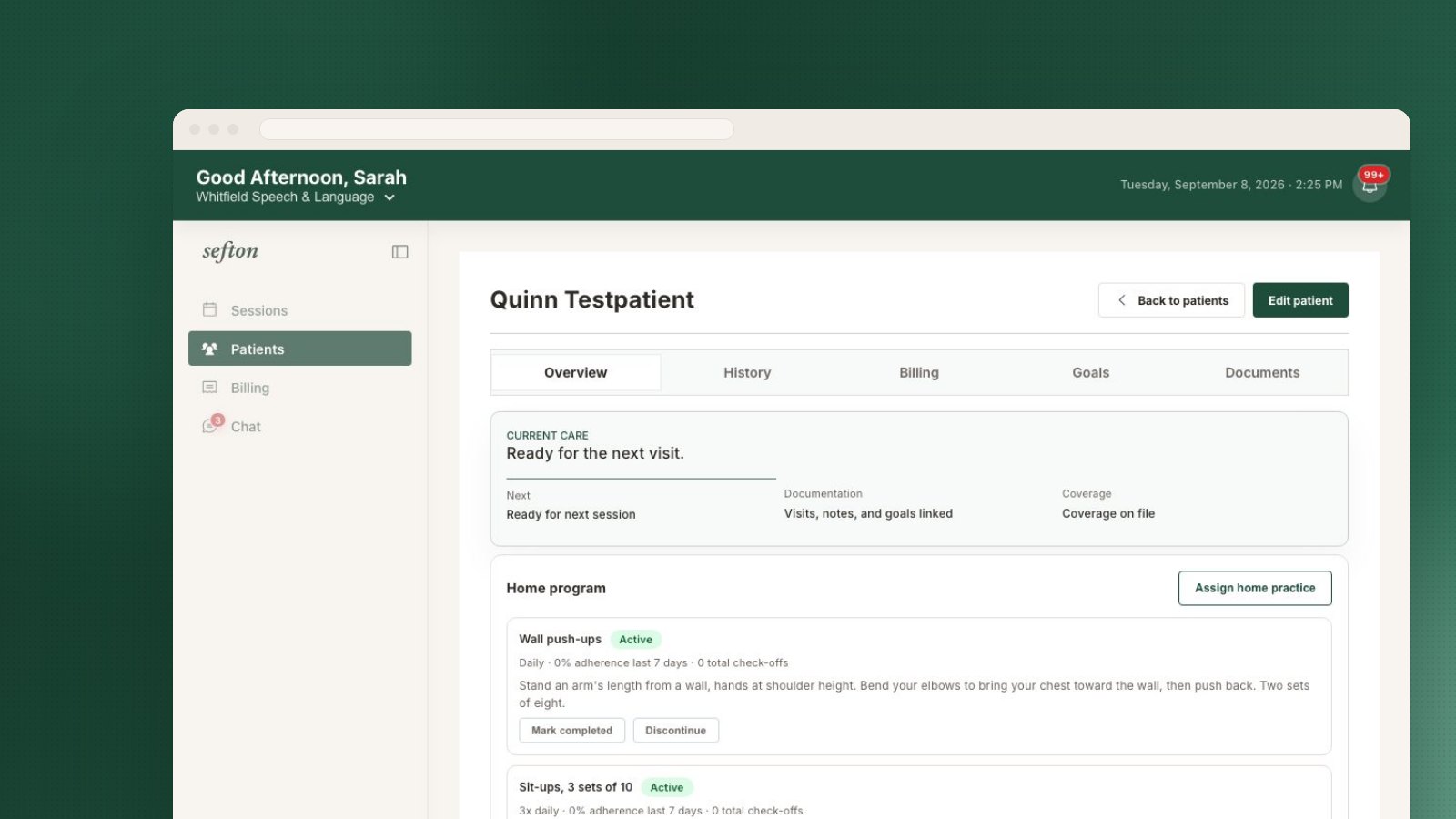
Delivered services are tracked against the plan of care; the modifier suggestion in Quick Dictate includes KX when the threshold applies, and you confirm it during code review. Progress data recorded per session is the evidence that KX rests on. See Goals and progress and Plan of care.
Frequently asked questions
Is there still a therapy cap?
No hard cap. Since 2018 there is a threshold above which claims need the KX modifier attesting medical necessity, and a higher threshold above which claims may be selected for targeted medical review.
Does the threshold combine disciplines?
PT and SLP share one threshold; OT has its own. Track them separately.